Weekend Warriors Are Going Pro-Level with Their Data — and It's Actually Working
Weekend Warriors Are Going Pro-Level with Their Data — and It's Actually Working
Not long ago, if you wanted the kind of performance analytics that college programs and pro teams used, you needed a sports science department, a six-figure budget, and a staff of analysts. The average 40-year-old marathon runner in Columbus, Ohio, or the rec-league basketball player grinding through Thursday night games in Phoenix — they were flying blind by comparison.
That gap has closed faster than most people realize.
In 2025, the tools that once lived exclusively inside Division I weight rooms and NFL training facilities are sitting on the wrists, phones, and dashboards of everyday American athletes. And the recreational competitors who've figured out how to use them aren't just feeling better about their training — they're producing measurable, trackable results that rival what structured programs deliver.
Here's what that actually looks like on the ground.
The 40-Year-Old Who Started Training Like a Data Scientist
Marcus, a 42-year-old project manager from suburban Atlanta, had been running marathons for six years before he started taking his data seriously. He'd finished several races, always somewhere in the four-hour range, always feeling like he'd left something on the course.
"I was training hard, but I wasn't training smart," he says. "I had no idea what my heart rate zones actually meant for my specific physiology. I was just running and hoping."
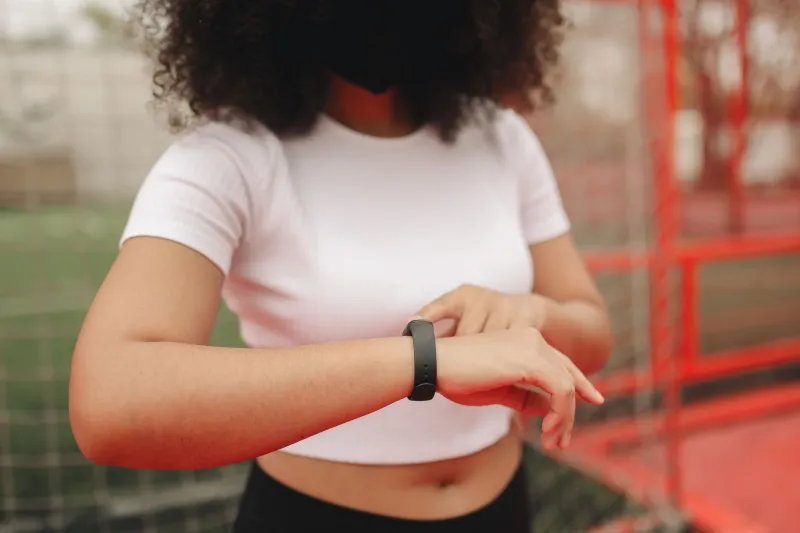
Two years ago, Marcus started using a GPS running watch with advanced heart rate variability (HRV) tracking, paired with an AI coaching app that adjusts weekly training plans based on recovery data. The shift was immediate — and humbling. The app told him he'd been running his easy days too fast and his hard days not hard enough. Classic amateur mistake, it turns out.
His most recent marathon? Three hours and forty-one minutes. A personal best by more than eighteen minutes.
"I'm older than I've ever been and running faster than I ever have," he says. "The data basically told me what I was doing wrong and I just... listened to it."
Rec League, Pro Mindset
It's not just endurance athletes getting in on the analytics revolution. Darius, a 31-year-old in Denver, plays in a competitive recreational basketball league three nights a week. He started wearing a player-tracking sleeve last season that monitors jump height, sprint speed, and workload accumulation across games.
The insight that changed his game? He was burning out in the fourth quarter not because of poor conditioning, but because of how he was managing his effort in the first half. The data showed a consistent pattern of overexertion in minutes 5 through 15 — a habit he'd never noticed because he felt fine in the moment.
"I thought I had great stamina. Turns out I had great early-game stamina and nothing left when it mattered," Darius says. "Once I saw that pattern in the numbers, I couldn't unsee it. I changed how I paced myself and my fourth-quarter stats went through the roof."
This kind of insight — the sort that used to require a coaching staff reviewing game film — is now available to any rec player willing to spend a few minutes reviewing their post-game dashboard.
High School Swimming Meets Machine Learning
The trend isn't limited to adult amateurs. Seventeen-year-old Priya swims for a club team in the Chicago suburbs that doesn't have a full-time analytics staff. But her parents invested in a swim-specific wearable that tracks stroke rate, distance per stroke, and turn efficiency — metrics that elite programs have measured for decades but that trickle-down technology has made accessible at the club level.
Her coach uses the data to personalize her taper schedule ahead of meets, something that used to be based almost entirely on feel and experience. The result has been more consistent peak performances — Priya has dropped time in eight of her last nine competitions.
"Before, I'd have a great meet and then a mediocre one and no one really knew why," she says. "Now we can usually see it in the data before the meet even happens."
The Tools Making This Possible in 2025
So what's actually in the toolkit? Here's a practical breakdown of what recreational athletes are using right now — and what they're paying for it:
GPS Running Watches with HRV Tracking — Brands like Garmin and Polar offer consumer-grade devices that track heart rate variability, training load, sleep quality, and recovery readiness. Entry-level options start around $200, with more advanced models in the $400–$600 range. These used to be pro-tier features.
AI Coaching Apps — Platforms like Garmin Coach, Runna, and TrainingPeaks use your biometric data to generate adaptive training plans. Several offer free tiers, with premium subscriptions typically running $10–$20 per month. The AI doesn't replace a human coach, but for athletes without access to one, it's a genuinely useful stand-in.
Sport-Specific Wearables — From basketball performance sleeves to swim-stroke sensors to soccer GPS vests, sport-specific devices have dropped dramatically in price. Many club teams and recreational leagues now pool resources to share equipment, further lowering the barrier.
Video Analysis Apps — Tools like Hudl and Coach's Eye allow athletes to film themselves and analyze movement frame by frame. These apps were originally built for team sports programs but have become popular with individual athletes doing self-coaching.
Recovery Tracking — Devices like the Whoop strap and the Oura ring focus specifically on recovery metrics rather than performance output. For athletes managing training load alongside full-time jobs and families, knowing when not to push hard is often the most valuable data point of all.
The Catch: Data Without Context Is Just Numbers
Here's the honest caveat that any good analytics conversation requires: the tools only work if you know what to do with the information.
One of the most common mistakes recreational athletes make is collecting data and then either ignoring it or misinterpreting it. Seeing a low HRV score and training hard anyway defeats the purpose. Fixating on a single metric while ignoring the broader picture is another trap.
The athletes seeing the best results are the ones treating their data like a conversation — asking questions of it, noticing patterns over time, and adjusting behavior based on trends rather than single data points. Marcus, Darius, and Priya all describe a learning curve of several weeks before the data started feeling actionable rather than overwhelming.
Start with one or two metrics. Track them consistently. Let the patterns emerge before you add complexity.
The Democratization of Performance
What's happening across American recreational sports right now is genuinely significant. For the first time, the performance gap between a Division I athlete with a full support staff and a motivated amateur with a $300 watch and a $15-per-month app subscription is narrowing in meaningful ways.
That doesn't mean a weekend warrior is going to out-train a college athlete. But it does mean that the tools for understanding your own body — and optimizing your training around what the data actually shows — are no longer gated behind institutional resources.
Every serious athlete, at every level, deserves access to their own performance story. In 2025, that story is finally being told in numbers that anyone can read.
Track every rep. Own every result. The scoreboard has always been there — now you finally have the stats to back it up.