Your Best Performance Metric Isn't on Any Scoreboard — Here's What You're Missing
Your Best Performance Metric Isn't on Any Scoreboard — Here's What You're Missing
Every gym has that one whiteboard. The one with the top squat numbers, the fastest mile times, the heaviest deadlifts. People crowd around it after a workout, scanning for their name, measuring themselves against the person two slots above them. It's motivating. It's also incomplete.
Because the records that are actually shaping your athletic future? They're invisible. They don't get written on whiteboards. Nobody's clapping for them. But they're compounding quietly in the background, and the athletes who pay attention to them are the ones who keep improving long after everyone else plateaus.
At Goal289, we're all about tracking every rep — but sometimes the most important reps aren't the ones you're counting in the gym.
What Is an 'Invisible PR,' Exactly?
Let's define it simply: an invisible PR is a personal record tied to process rather than outcome. It's not how much you lifted or how fast you ran. It's how consistently you showed up, how well you recovered, how disciplined your preparation was.
Think about it this way. Two athletes both hit a 315-pound bench press. One of them slept five hours, skipped their warm-up, and hasn't hit the gym consistently in three weeks. The other logged seven nights of quality sleep in a row, hasn't missed a scheduled session in 47 days, and tracked their nutrition every single day this month. Same outcome stat. Wildly different process stats.
Which athlete do you think is going to be stronger six months from now?
The invisible PR is the difference between those two people.
The Metrics Worth Tracking (That You Probably Aren't)
So what actually counts as an invisible PR? Here are some of the most powerful ones — and why they matter.
Consistency Streaks
Not just "days in a row at the gym," but more specific streaks: consecutive days hitting your protein target, consecutive weeks completing every planned training session, consecutive mornings doing your mobility work. Streaks create identity. When you've hit 30 days of something, you stop thinking of yourself as someone who tries to do that thing and start thinking of yourself as someone who does it. That mental shift is massive.
Your invisible PR here: What's the longest stretch you've ever gone without missing a scheduled workout? If it's 12 days, make 13 your next target. Then 20. Then 30.
Recovery Quality Scores
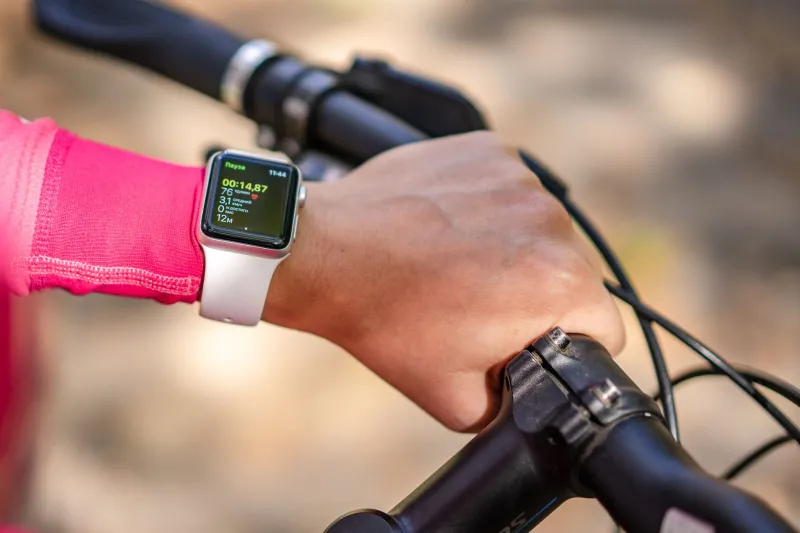
Tools like WHOOP, Garmin's Body Battery, or even the basic sleep tracking on your Apple Watch are giving athletes data that coaches used to only guess at. Your recovery score on any given morning is arguably more predictive of your performance that day than your training history from the week before.
But here's the thing — most people glance at that number and move on. The athletes getting real value out of it are the ones who track trends. What's your best 7-day average recovery score ever? What behaviors led to it? That's a PR worth chasing.
Effort Consistency Ratings
This one requires some self-honesty. After each session, rate your effort on a simple 1-10 scale. Not the performance — the effort. You can have an off day physically and still give a genuine 9/10 effort. You can also crush your numbers while mentally coasting at a 6.
Track those effort scores over time. What's your longest streak of 8-or-above effort sessions? That number tells you something real about your mental engagement with training — and mental engagement is one of the strongest predictors of long-term progress researchers have found.
Preparation Completeness
Did you do your warm-up? Did you review your training plan the night before? Did you pack your gym bag, prep your meals, hydrate properly before you even walked in the door? These aren't glamorous. Nobody's putting a trophy on the shelf for "remembered to foam roll." But athletes who nail their preparation consistently almost always outperform their less-prepared counterparts over a full season.
Start tracking a simple yes/no for your pre-session checklist. Your invisible PR: the longest streak of fully completed prep routines.
Why These Numbers Predict Performance Better Than the Obvious Ones
Here's the science-adjacent reality of it: outcome stats like weight lifted or mile pace are lagging indicators. They tell you what already happened. By the time you see a plateau in those numbers, the problem has usually been building for weeks in your process metrics.
Process stats are leading indicators. A drop in your recovery scores, a shortening of your consistency streak, a slide in your effort ratings — these things show up before your performance tanks. If you're paying attention, you can course-correct early instead of wondering why your numbers suddenly went sideways.
This is exactly the kind of insight that separates athletes who use data well from athletes who just collect it. Logging your lifts is fine. Understanding the behavioral patterns underneath those lifts is where the real leverage is.
How to Actually Start Tracking This Stuff
You don't need a fancy setup. A notebook and a phone work fine. Here's a dead-simple framework:
-
Pick two or three process metrics that matter to your specific goals. If recovery is your weakness, focus there. If consistency is your issue, track streaks. Don't try to monitor everything at once.
-
Establish your baseline. Spend two weeks just logging without judgment. What does your normal look like? That becomes your starting point.
-
Set a micro-target. Not "I want a 90-day streak." Just "I want to beat my current best by one." That's the Goal289 philosophy in action — incremental, specific, achievable targets that compound into something big.
-
Review weekly, not just daily. Daily numbers are noisy. Weekly trends tell the real story.
-
Celebrate the invisible PRs out loud. Tell your training partner. Post it if you want. The culture around fitness tends to celebrate outcome records and ignore process records — flip that script for yourself.
The Record Nobody Sees Coming
Here's the part that might surprise you: athletes who start obsessing over their invisible PRs almost always see their visible ones improve too. Because consistency compounds. Because recovery drives adaptation. Because preparation turns good sessions into great ones.
The whiteboard at your gym shows you where you are. Your process metrics show you where you're headed. Both matter — but only one of them is actually under your control on any given day.
Start tracking the records nobody else can see. Those are the ones that'll define everything else.